In the present, businesses are witnessing a paradigm shift in which speed, flexibility, and efficiency are not optional, they are essential. The old infrastructure, which is costly and difficult to upgrade can’t meet the growing demand for distributed and real-time analytics. ScalerPi introduces a fresh perspective by combining edge computing and practical engineering in order to offer solutions that can truly are scalable.
At the heart of this evolution is industrial automation using Raspberry Pi, which enables organizations to consider a new way to develop and manage their systems. Instead of being dependent on large, centralized equipment, companies are now able to implement lightweight but powerful devices that operate directly in the place where data is generated. This strategy not only lowers the amount of latency, but also allows teams to react immediately to the changing environment.
Converting Data into Action at the Edge
The main benefit of edge computing lies in the ability to process data locally. In many industrial environments it is not practical to wait for cloud-based systems is just not practical. ScalerPi offers an infrastructure that is completely independent, yet can be integrated with other systems, if required.
An essential component of this setup is the industrial Raspberry Pi IOT gateway, which acts as the central connection point between devices and applications. This gateway facilitates seamless communications between machines, sensors, as well as software platforms. Data is transferred securely and efficiently. This enables you to observe operations in real time, spot issues earlier, and maintain an even performance across several locations.
In the field of logistics and environmental monitoring, this technology is transformational. Systems can operate even in remote or low-connectivity regions, which means that the operation continues uninterrupted and data remains accessible.
Compact Power for Demanding Environments
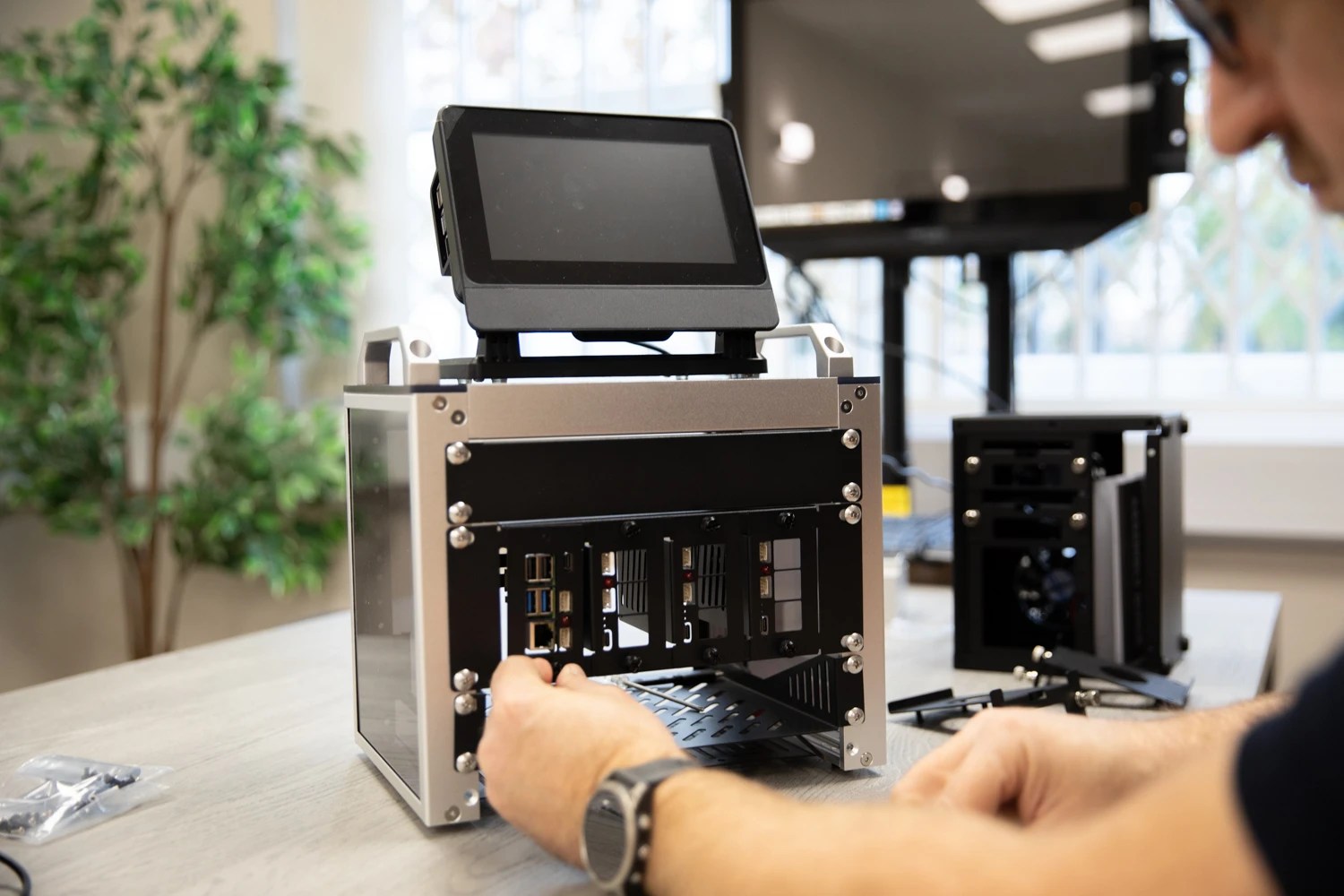
One of the most difficult issues in industrial computing is the balance of performance and practicality. While big servers are extremely powerful but they are expensive with high energy consumption and are not flexible enough. ScalerPi overcomes this with industrial Raspberry Pi servers that deliver high-quality computing in a small, energy-efficient form.
They are specifically designed for use in real-world situations where space and power are limited. They are suitable for use in a factory or retail outlet, as well as remote monitoring stations. Modularity allows businesses to grow their systems gradually, based on their actual needs.
The industrial-sized Raspberry Pi server module offers even more versatility. It is designed to handle the most demanding environments they combine endurance with high-end processing capabilities. They are perfect for applications that require continuous operations such as smart cities, or industrial automation systems.
Containerized deployment provides flexibility
Modern infrastructures must be able to adapt and this is where containerization plays an essential function. ScalerPi integrates industrial Raspberry Pi docker environments that allow for the flexibility and efficiency of application management. With Docker businesses can easily deploy applications, update and scale applications quickly without disrupting ongoing operations.
This reduces the time spent developing, and guarantees consistency between deployments. Applications can be tested in a single environment before being seamlessly transferred to another one, minimizing the risk of mistakes and improving overall reliability. This degree of control, that is vital for businesses that have multiple locations is extremely valuable.
Containerization can also help in the development of new ideas. Teams can experiment and test new features without impacting existing systems.
Practical Solutions across multiple sectors
ScalerPi is a powerful tool as it is able to adapt to a wide range of industries. Industrial automation with Raspberry Pi assists in reducing time to repair, increase efficiency and enable predictive maintenance in manufacturing. The machines are able to transmit and share data in order to create a more connected and intelligent working environment.
In the agricultural sector, edge-based technology can allow farmers to implement more intelligent farming techniques. Sensors track soil conditions, weather patterns as well as the health of crops. This helps farmers make informed decisions that will increase yields and help conserve resources.
Real-time insight into customer behavior is beneficial for the hospitality and retail sectors. Companies can enhance their processes while improving the customer experience. From digital signage and queue management to digital signs, businesses are able to improve the experience for customers. Edge infrastructure is employed in public sector projects such as smart cities for monitoring environmental issues and asset management.
Bridge Hardware and Cloud Confidently
ScalerPi is unique because of its ability to bridge between physical devices, and cloud-based systems. It provides a unified platform by combining the expertise of hardware with modern cloud practices.
This strategy allows businesses to grow without difficulty. The infrastructure is easily manageable, cost-effective, and secure whether you start with a tiny deployment, or scale up to thousands of devices. The transparent pricing system and modular design aid in the process and allow organizations to concentrate on developing new ideas rather than addressing operational issues.
Industrial Technology: A Future-Ready Approach
As the world of work continues to change and change, the demand for a flexible and efficient infrastructures will increase. ScalerPi can be a solution which meets these needs by combining power of the edge and Raspberry Pi technology.
Each component of the system, from industrial Raspberry Pi servers to advanced IoT Gateways and containerized apps is designed to ensure scalability and usability. The result is an infrastructure that is not just able to meet today’s needs but also prepares companies for the challenges of tomorrow.